

Saudi jobs are booming like never before. Under Vision 2030, Saudi Arabia is spending hundreds of billions of dollars on giga-projects such as NEOM, the Red Sea Project, Qiddiya, ROSHN and Diriyah, while preparing to host Expo 2030 in Riyadh and the FIFA World Cup in 2034. The result is huge demand for engineers, technicians, healthcare workers, hospitality staff, IT specialists and skilled tradespeople. This complete guide explains where to find genuine Saudi jobs, how the work visa and Iqama process works, what salaries to expect and how to apply safely from India in nine easy steps.
In this guide you will learn:
- The fastest-growing sectors and cities for Saudi jobs in 2026
- The step-by-step work visa, medical, stamping and Iqama process
- Realistic salary ranges and benefits
- Your key rights under Saudi labour law and how to avoid fake agents
Why Saudi Jobs Are in High Demand
Saudi Arabia is the largest economy in the Gulf and is moving away from oil dependence. New industries – tourism, entertainment, mining, logistics, renewable energy, manufacturing and technology – are expanding rapidly. At the same time, the government is building new cities, airports, railways, stadiums and hotels. This construction and diversification wave means Saudi jobs are available at every level, from site labourers and heavy equipment operators to project managers, doctors and data scientists.
For Indian workers, the Kingdom is already a familiar destination: more than two million Indians live in Saudi Arabia, many of them in Riyadh, Jeddah, Dammam, Al Khobar and Jubail. Salaries are tax-free, many employers provide accommodation or housing allowances, and the cost of living outside Riyadh and Jeddah is moderate compared with other Gulf cities.

Top Sectors Offering Saudi Jobs in 2026
| Sector | Typical Roles | Main Locations |
|---|---|---|
| Construction & Giga-Projects | Civil/MEP engineers, surveyors, foremen, scaffolders, steel fixers, heavy equipment operators | NEOM (Tabuk), Riyadh, Red Sea coast, Qiddiya |
| Oil, Gas & Petrochemicals | Process, mechanical and instrumentation engineers, technicians, HSE officers | Dammam, Jubail, Ras Tanura, Yanbu |
| Healthcare | Nurses, doctors, pharmacists, radiographers, lab technicians | Nationwide |
| Hospitality & Tourism | Hotel staff, chefs, guest relations, tour operators | Makkah, Madinah, Riyadh, Jeddah, AlUla |
| IT & Digital | Software developers, cloud, cybersecurity, ERP consultants | Riyadh, Jeddah |
| Logistics & Transport | Heavy and light drivers, warehouse staff, supply-chain planners | Riyadh, Jeddah, Dammam |
| Retail & FMCG | Sales supervisors, merchandisers, store managers | Nationwide |
Construction remains the biggest employer of foreign workers. If you are a site professional, our detailed guide to construction jobs in Saudi Arabia covers project-specific opportunities and certifications.
Understanding Saudization (Nitaqat) Before Applying for Saudi Jobs
Saudi Arabia runs a localisation programme called Saudization, enforced through the Nitaqat system. Companies must employ a minimum percentage of Saudi nationals depending on their size and sector, and some professions are reserved fully or partly for citizens. Roles in sales, administration, HR, receptionist work, some accounting positions and many retail jobs have localisation targets. This does not mean foreigners cannot get Saudi jobs – it means you should focus on technical, specialised and hard-to-fill roles where expatriate expertise is still in demand, such as engineering, healthcare, skilled trades and IT.
9 Easy Steps to Apply for Saudi Jobs From India
1. Identify Your Target Profession
Choose roles where you have proven experience and where Saudization rules still allow expatriate hiring. Technical skills and certifications carry great weight in the Kingdom.
2. Build a Gulf-Ready CV
Use a clean two-page CV listing project names, equipment handled, software used and safety records. Saudi recruiters especially value experience on large projects. Our CV format guide shows exactly how to present it.
3. Search on Trusted Platforms
Search LinkedIn, Naukrigulf, Bayt, GulfTalent and the career portals of large employers such as Saudi Aramco, SABIC, NEOM, Red Sea Global, Saudi Electricity Company, major hospital groups and international contractors. Many contractors also advertise interviews in Indian newspapers and on official social media pages.
4. Register With Licensed Recruiters
Use only recruiting agents registered with India’s Ministry of External Affairs. Verify the licence number on the eMigrate portal before giving your passport or paying any service charge.
5. Prepare for Trade Tests and Interviews
Many Saudi jobs for skilled trades involve practical trade tests. For certain occupations, Saudi Arabia also requires workers from India to pass the Skill Verification Program (part of the Professional Accreditation Program) before a visa is issued. Ask your recruiter whether your trade is covered and complete the test at an approved centre.
6. Sign Your Offer and Contract
Read your offer carefully. It should clearly show basic salary, housing and transport allowances (or free accommodation and transport), working hours, annual leave, air tickets and contract period. Contracts in the private sector are increasingly documented on the Qiwa platform, and you should be able to see your contract details once you arrive.
7. Complete Medical and Visa Stamping
Once your employer issues the work visa, you complete a medical test at a GCC-approved medical centre (booked through the Wafid system) and submit biometrics and your visa stamping application through the authorised Saudi visa facilitation centre in India.
8. Clear Emigration if You Hold an ECR Passport
Saudi Arabia is one of 18 ECR countries. If your passport is ECR, your employer must register your job on eMigrate and you must obtain emigration clearance before departure. Read our emigration clearance guide for the full process.
9. Get Your Iqama After Arrival
After you arrive, your employer completes your residence permit, known as the Iqama. It is your official ID in the Kingdom and is linked to the Absher platform, where you can view your status, visas and traffic records.

Documents Required for Saudi Jobs
Having your documents ready before you start applying saves weeks of delay. Most Saudi jobs require the following:
- Original passport with at least six months’ validity and two blank pages
- Recent passport-size photographs with a white background
- Updated CV and copies of experience certificates
- Educational certificates – attested or apostilled for professional roles
- Professional registration for regulated jobs (for example, Saudi Council of Engineers accreditation for engineers or SCFHS licensing for healthcare professionals)
- Medical fitness report from an approved GCC medical centre
- Police clearance certificate, if requested
Certificate Attestation and Apostille
Saudi Arabia joined the Hague Apostille Convention, which simplifies legalisation for documents issued in other member countries, including India. In many cases an apostille from India’s Ministry of External Affairs is now accepted instead of multi-step embassy attestation. However, requirements can differ by employer and profession, so confirm with your recruiter which format is needed before you begin.
Professional Accreditation for Engineers and Health Workers
Engineering roles require registration with the Saudi Council of Engineers (SCE), and some positions require passing a professional exam. Nurses, doctors, pharmacists and allied health staff must be classified and registered by the Saudi Commission for Health Specialties (SCFHS), usually involving primary-source verification through DataFlow and a licensing exam. Start these processes early because they can take several weeks and are essential for many Saudi jobs in these fields.
Salary Guide for Popular Saudi Jobs
Pay in Saudi Arabia varies with the employer, project location, nationality-neutral market rates and your experience. The table below gives indicative monthly ranges in Saudi riyals (SAR). One riyal is worth roughly 23 to 24 Indian rupees – always check the live exchange rate.
| Role | Indicative Monthly Salary (SAR) |
|---|---|
| General labourer / helper | 1,000 – 1,800 + accommodation |
| Skilled tradesman (electrician, plumber, welder) | 1,800 – 4,000 |
| Heavy vehicle driver | 2,000 – 4,000 |
| Staff nurse | 4,500 – 11,000 |
| Accountant | 5,000 – 12,000 |
| Civil / mechanical engineer | 7,000 – 16,000 |
| IT professional / developer | 9,000 – 25,000 |
| Project manager | 18,000 – 40,000 |
Packages in remote project locations such as NEOM often include higher allowances, free food and camp accommodation. When comparing offers, calculate the total yearly value including allowances, tickets and end-of-service benefits.
Key Rights for Workers in Saudi Jobs
Saudi labour law, administered by the Ministry of Human Resources and Social Development (MHRSD), gives private-sector workers important protections:
- Working hours: Normally eight hours a day or 48 hours a week, reduced during Ramadan for Muslim employees. Overtime must be paid at a premium.
- Annual leave: At least 21 days per year, increasing to 30 days after five years with the same employer.
- End-of-service award: Half a month’s wage for each of the first five years and one full month’s wage for each year after that, subject to the rules on resignation.
- Wage protection: Salaries must be paid through banks and monitored through the wage protection system.
- Passport: Employers are not allowed to confiscate employees’ passports.
- Job mobility: Labour reforms introduced in 2021 allow eligible expatriate workers to change jobs and use exit and re-entry services under specific conditions without the employer’s consent.
- Medical insurance: Employers must provide health insurance for private-sector employees.
If you face problems such as unpaid wages, you can file a complaint through MHRSD channels, and Indian workers can contact the Indian Embassy in Riyadh or the Consulate General in Jeddah.
Best Cities for Saudi Jobs
Riyadh
The capital is the corporate and government hub, with headquarters of banks, consultancies, tech companies and giga-project developers. Most white-collar Saudi jobs are based here.
Jeddah
Jeddah is the commercial gateway on the Red Sea, with strong demand in trade, logistics, retail, hospitality and healthcare. It is also close to Makkah, a major hospitality market.
Dammam, Al Khobar and Jubail
The Eastern Province is the centre of the oil, gas and petrochemical industry. Engineers, technicians and maintenance crews find steady work here, and the region has a large, long-established Indian community.
NEOM and Tabuk Region
NEOM is one of the world’s largest construction projects. Roles are mostly project-based, located in remote camps, and often come with attractive allowances. Expect strict safety standards and rotational schedules.
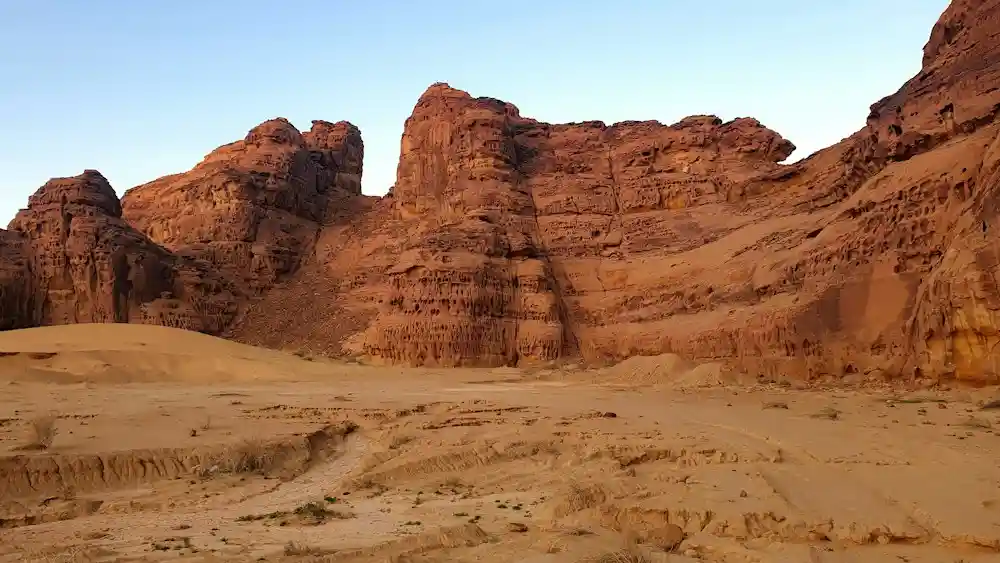
Costs and Practical Tips for Living in Saudi Arabia
Living costs are generally lower than in Dubai or Doha, but plan carefully. If you are bringing family, remember that Saudi Arabia charges a monthly expatriate dependant fee for each family member, which adds up quickly, along with school fees and rent. Single workers often live in employer-provided accommodation, which significantly increases savings.
- Keep your Iqama valid and carry it at all times.
- Use Absher for official services and exit/re-entry visas.
- Respect prayer times, local dress norms and public conduct rules.
- Send money home through banks or licensed exchange houses only.
- Learn basic Arabic phrases – it helps at work and in daily life.
Saudi Arabia has also opened up considerably in recent years, with tourist visas, cinemas, concerts and sporting events that make life more enjoyable for expatriates.
Saudi Jobs for Women
Opportunities for women have expanded dramatically since 2018 reforms that allowed women to drive and opened many workplaces. Female expatriates commonly find Saudi jobs in nursing, medicine, teaching, beauty and wellness, hospitality, retail management, HR, IT and marketing. International schools and hospitals are among the largest employers of foreign women. When considering an offer, check accommodation arrangements, transport, working hours and whether the company has prior experience hiring international female staff.
Interview Tips for Saudi Jobs
Employers hiring for Saudi jobs, particularly contractors, often run large interview drives in Indian cities such as Mumbai, Kochi, Chennai, Hyderabad, Lucknow and Delhi. To stand out:
- Bring proof of skills: photos or videos of your work, certificates and reference letters.
- Know your project experience: be ready to describe the size, budget and your exact responsibilities on past projects.
- Highlight safety training: OSHA, IOSH or NEBOSH certificates and a clean safety record impress Saudi recruiters.
- Discuss rotations honestly: remote projects may require long rotations; show that you understand the lifestyle.
- Ask about the visa profession: make sure the job title on your visa matches your actual role.
For sample answers, see our list of interview questions for Gulf jobs.
Common Mistakes to Avoid With Saudi Jobs
- Accepting a different visa profession: If your visa says “labourer” but you are hired as a technician, you may face problems with salary, transfers or licensing later.
- Not reading the contract in English: Always ask for an English or bilingual copy of your contract and keep it safe.
- Ignoring Iqama renewal: An expired Iqama leads to fines and problems with banking and travel.
- Leaving without a final settlement: Before final exit, ensure your end-of-service benefits and pending salaries are paid and documented.
- Trusting unofficial “visa sellers”: Buying a so-called “free visa” is illegal and leaves you without legal protection. Genuine Saudi jobs always come with a real employer sponsoring your visa.
Saudi Jobs vs Other Gulf Countries
How do Saudi jobs compare with the rest of the Gulf? Salaries in the Kingdom are competitive for engineers and specialists, and the scale of projects offers fast career growth. Living costs outside Riyadh and Jeddah are lower than in Dubai or Doha, helping workers save more. On the other hand, dependant fees can make it expensive to bring families, and remote project locations may involve long rotations. Many professionals start with Saudi jobs to gain big-project experience and later move to the UAE or Qatar – or stay long term as the Kingdom continues to open up.
How to Spot Fake Saudi Jobs
High demand also attracts fraudsters. Be careful if a recruiter asks for money before showing a genuine visa, promises unrealistic salaries for unskilled roles, uses free email accounts, or asks you to travel on a visit visa to “find work”. Saudi work visas are issued only against a specific employer and occupation. Check our guide to job scams in the Gulf before you pay anything to anyone.
Conclusion: Is It a Good Time to Look for Saudi Jobs?
Yes. With giga-projects, Expo 2030, World Cup 2034 preparation and rapid economic diversification, Saudi jobs offer some of the strongest opportunities in the Gulf for skilled Indians. Focus on in-demand technical skills, use registered recruiters, understand Saudization rules and read your contract carefully. Browse the latest openings in our Saudi Arabia jobs category and compare options in neighbouring countries with our Qatar jobs guide.
Keep checking GulfJobly for new guides, recruitment drive alerts and rule changes. Saudi labour regulations are being modernised quickly, and staying up to date will help you make confident, informed decisions about your next career move in the Kingdom.
Frequently Asked Questions About Saudi Jobs
How can I apply for Saudi jobs from India?
Apply through LinkedIn, Gulf job portals, official company career pages and recruiting agents registered on India’s eMigrate portal. Prepare a Gulf-style CV, keep certificates ready and attend interviews or trade tests organised in Indian cities.
What is an Iqama?
The Iqama is the residence permit and ID card for expatriates in Saudi Arabia. Your employer issues it after you arrive on a work visa, and you need it for banking, SIM cards, healthcare and most government services.
Do I have to pay for a Saudi work visa?
Visa and recruitment costs are the employer’s responsibility. Registered Indian agents may charge only the service fee allowed by the Government of India. Never pay large amounts for a visa.
Which Saudi jobs are best for Indians?
Engineering, construction trades, oil and gas, healthcare, IT, hospitality and logistics roles offer the best opportunities, especially in professions not covered by Saudization rules.
Can I change my job in Saudi Arabia?
Yes. Under the labour reforms introduced in 2021, eligible expatriates can transfer to a new employer under specific conditions, such as after completing their contract or when wages are not paid.